Overview of the Clothing Industries Today
The clothing industries play a major role in the global economy, supporting millions of jobs across manufacturing, logistics, retail, and design. From small factories to global fashion brands, the clothing industries connect raw material suppliers, garment manufacturers, distributors, and end consumers into one massive supply chain.
Today, the clothing industries are facing faster change than ever before. Rising production costs, global uncertainty, technology shifts, and changing consumer expectations are forcing businesses to adapt quickly. Traditional production models that relied on low-cost labor and long supply chains are becoming less reliable and less profitable.
Another important factor shaping the clothing industries is speed. Brands are expected to design, produce, and deliver products faster while keeping prices competitive and quality consistent. This pressure affects every level of the clothing industries, especially manufacturers and suppliers who operate on tight margins.
Understanding how the clothing industries function today is the first step to understanding how the business is being impacted and what companies must do to stay competitive.
How the Clothing Industries Are Being Impacted by Global Market Changes
Global market conditions have a direct and immediate impact on the clothing industries. Economic instability, inflation, trade restrictions, and geopolitical issues all influence how clothing businesses operate.
Rising Production and Raw Material Costs
One of the biggest challenges in the clothing industries is the continuous rise in raw material costs. Cotton, polyester, recycled fabrics, and specialty textiles have all increased in price due to higher energy costs, limited supply, and increased demand. These rising costs directly affect garment manufacturers and brands that rely on stable pricing to plan production.
For many businesses in the clothing industries, higher material costs mean lower profit margins unless prices are passed on to customers. However, price-sensitive consumers often resist higher retail prices, creating pressure across the entire supply chain.
Supply Chain Disruptions and Delays
Supply chain disruptions remain a major issue in the clothing industries. Delays in shipping, port congestion, and unreliable delivery schedules make it harder for brands to plan launches and restock inventory. Long-distance sourcing has become riskier, especially for fast-moving fashion and seasonal collections.
As a result, many companies in the clothing industries are rethinking where and how they source their products.
Labor Shortages and Workforce Challenges
Labor availability is another growing concern in the clothing industries. Skilled garment workers are becoming harder to find in some regions, while wages are rising in traditional manufacturing hubs. This impacts production capacity, lead times, and quality control.
Technology Impact on the Clothing Industries
Technology is transforming how the clothing industries operate, from design and production to inventory management and sales forecasting. Businesses that invest in technology are gaining efficiency, while those that resist change risk falling behind.
Automation and Smart Manufacturing
Automation is becoming more common in the clothing industries, especially in cutting, sewing, and quality control. Automated machines reduce production time, lower error rates, and help manufacturers handle higher volumes without relying entirely on manual labor.
Smart manufacturing also allows factories to track production in real time, improving planning and reducing waste.
AI, Data, and Demand Forecasting
Artificial intelligence and data analytics are playing a growing role in the clothing industries. Brands now use data to predict demand, reduce overproduction, and manage inventory more accurately. This helps businesses avoid excess stock, which is a major cost problem in apparel.
Better forecasting allows companies in the clothing industries to align production with real customer demand.
Digital Tools for Inventory and Production Management
Digital platforms help manufacturers and brands manage orders, suppliers, and logistics in one place. These tools improve transparency and communication across the clothing industries, reducing mistakes and delays.
Sustainability Pressure in the Clothing Industries
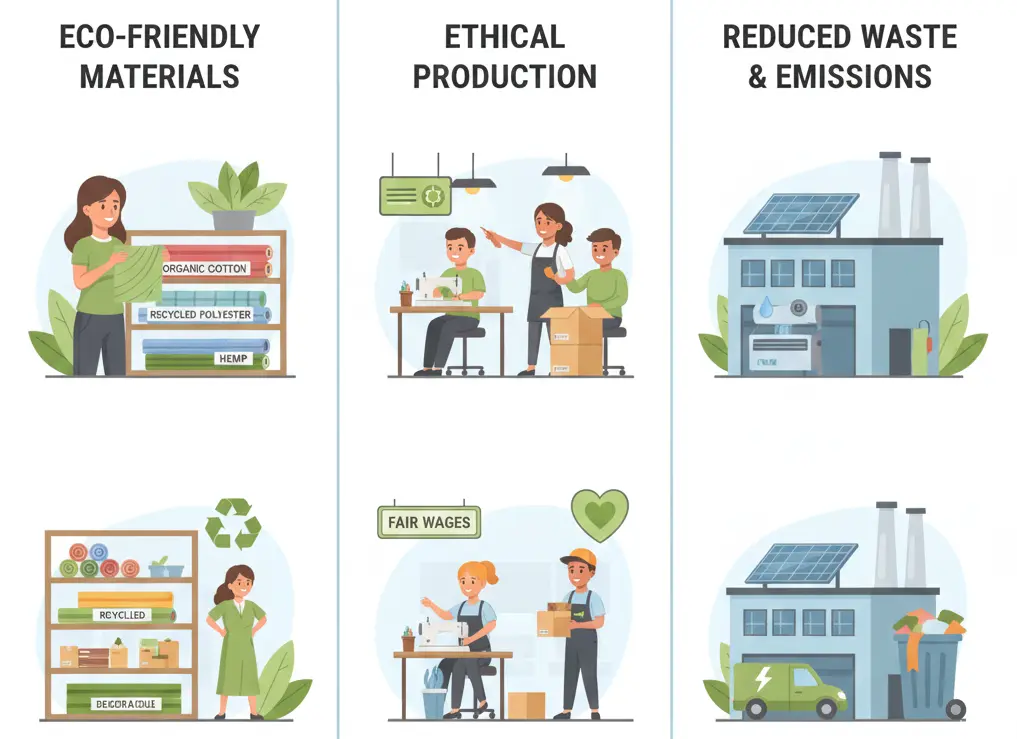
Sustainability has moved from a marketing trend to a business requirement in the clothing industries. Governments, consumers, and retailers are demanding higher environmental and ethical standards.
Environmental Regulations and Compliance Requirements
New regulations are forcing businesses in the clothing industries to reduce pollution, manage waste responsibly, and improve working conditions. Compliance with these rules often requires investment in better equipment, cleaner processes, and proper certifications.
Demand for Sustainable and Recycled Materials
Consumers increasingly prefer brands that use sustainable and recycled materials. This shift is changing sourcing strategies across the clothing industries. While sustainable materials can be more expensive, they help brands build trust and long-term loyalty.
Impact of Sustainability on Pricing and Margins
Sustainability initiatives often increase short-term costs for businesses in the clothing industries. However, companies that invest early can gain a competitive advantage by meeting retailer requirements and attracting eco-conscious customers.
Consumer Behavior Changes Affecting the Clothing Industries
Consumer behavior is one of the strongest forces shaping the clothing industries today. Shoppers expect more value, transparency, and speed than ever before.
Demand for Fast Delivery and Customization
Modern consumers want faster delivery and more personalized products. This pushes businesses in the clothing industries to reduce lead times and offer flexible production options such as low MOQ or made-to-order models.
Growth of Ethical and Transparent Brands
Shoppers are paying more attention to how and where clothes are made. Brands that communicate clearly about their supply chain and production practices gain trust, while those that do not risk losing customers.
Influence of Social Media and Online Shopping
Social media platforms heavily influence trends and purchasing decisions in the clothing industries. Brands must react quickly to viral demand, which requires flexible production and reliable suppliers.
Challenges Facing the Clothing Industries Today
Despite opportunities, the clothing industries face several ongoing challenges that affect profitability and growth.
Rising costs, intense competition, and shrinking margins make it difficult for businesses to scale. Many brands struggle to balance quality, price, and speed while meeting sustainability expectations.
Competition from low-cost manufacturers continues to pressure pricing, while brand differentiation becomes harder in a crowded market. Businesses that fail to innovate or adapt risk losing relevance.
Opportunities for Growth in the Clothing Industries
Even with challenges, the clothing industries offer strong growth opportunities for businesses that adapt.
Nearshoring and Local Manufacturing
Nearshoring is becoming more popular as companies seek faster delivery and better supply chain control. Local production reduces risk and improves responsiveness to market demand.
Private Label and Low MOQ Production
Low MOQ manufacturing allows brands to test new products with less risk. This model is especially attractive for startups and niche brands within the clothing industries.
Expansion into Niche Markets
Specialized markets such as workwear, sportswear, kids wear, and sustainable fashion offer higher margins and less competition.
Future Trends Shaping the Clothing Industries
The future of the clothing industries will be driven by innovation, flexibility, and efficiency.
Smart Fabrics and Innovation
Smart textiles, performance fabrics, and technical materials are gaining popularity across multiple sectors, including sportswear and workwear.
On-Demand and Made-to-Order Production
On-demand production reduces waste and inventory costs while aligning closely with real customer demand.
Long-Term Digital Transformation
Digital transformation will continue to reshape the clothing industries, from virtual sampling to automated production planning.
What Businesses Must Do to Stay Competitive in the Clothing Industries
To succeed, businesses in the clothing industries must focus on efficiency, adaptability, and long-term strategy. Investing in technology, building flexible supply chains, and understanding customer demand are no longer optional.
Companies that prioritize transparency, sustainability, and smart production decisions will be better positioned to grow in a competitive market.
Final Thoughts on the Clothing Industries and Business Impact
The clothing industries are at a turning point. Rising costs, global uncertainty, and changing consumer behavior are reshaping how businesses operate. While the challenges are real, so are the opportunities.
Businesses that understand how the clothing industries are being impacted and take action early will have a clear advantage. Adaptation, innovation, and smart decision-making will define long-term success in the modern apparel market.