What Makes a Clothing Manufacturer Sustainable
A sustainable clothing manufacturer focuses on reducing environmental impact while maintaining ethical production standards. This includes responsible material sourcing, waste reduction, energy efficiency, and fair labor practices.
True sustainability is not just a marketing claim. It requires measurable actions across the entire production process.
Sustainable Materials Used by Clothing Manufacturers
Material choice is one of the most important sustainability factors.
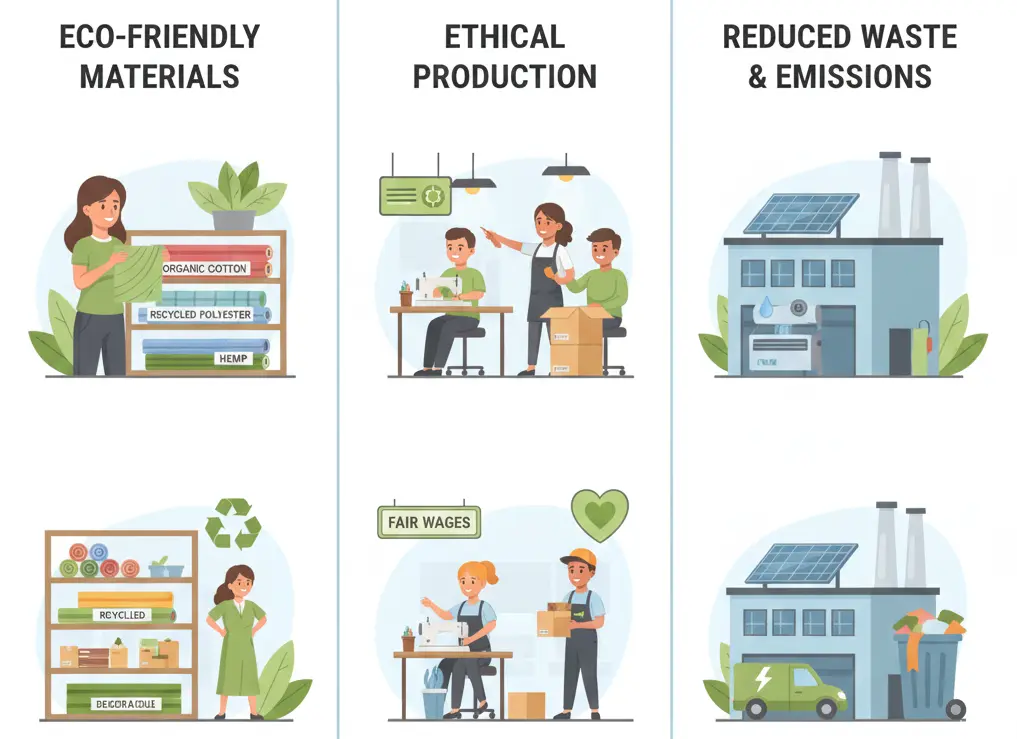
Many clothing manufacturers now offer recycled polyester, organic cotton, and low-impact dyed fabrics. These materials reduce water usage, chemical waste, and carbon emissions compared to conventional textiles.
Brands should ask about fabric origin, certifications, and performance differences when choosing sustainable materials.
Ethical Labor and Responsible Production
Sustainability also includes how workers are treated.
A responsible clothing manufacturer ensures safe working conditions, fair wages, and compliance with labor laws. Ethical production reduces risk and protects brand image, especially for brands selling in regulated markets.
Brands should not hesitate to ask how labor standards are monitored and enforced.
Certifications to Look for in a Sustainable Clothing Manufacturer
Certifications help verify sustainability claims.
Common certifications relate to material safety, recycled content, and ethical manufacturing standards. While certifications alone are not enough, they provide added transparency and credibility.
Brands should view certifications as supporting evidence rather than the sole deciding factor.
Balancing Sustainability, Cost, and Performance
Sustainable production can sometimes increase costs, especially at lower volumes.
A good clothing manufacturer helps brands balance sustainability goals with performance requirements and budget constraints. Open discussion about trade-offs is essential when planning production.
How to Evaluate Sustainability Claims From Clothing Manufacturers
Brands should be cautious of vague or unsupported sustainability claims.
Ask for documentation, fabric details, and examples of sustainable practices already in place. A trustworthy clothing manufacturer will provide clear answers instead of generic marketing language.
Final Thoughts on Choosing a Sustainable Clothing Manufacturer
Sustainability will continue to shape the clothing industry beyond 2026. Brands that partner with a sustainable clothing manufacturer position themselves for long-term success, stronger customer trust, and better compliance with future regulations.