What Are Minimum Order Quantities in Clothing Manufacturing
Minimum order quantity refers to the smallest number of units a clothing manufacturer requires per style, color, or design. MOQs exist because garment production involves fabric sourcing, pattern setup, labor planning, and machine calibration.
Producing very small quantities increases costs and inefficiencies, which is why most clothing manufacturers set a minimum threshold for orders.
Why Clothing Manufacturers Set MOQs
MOQs are not arbitrary. They are based on operational realities.
A clothing manufacturer uses MOQs to optimize production efficiency, manage fabric usage, and control labor costs. Lower quantities often mean higher per-unit prices or production refusal.
Understanding this helps brands negotiate realistically and plan production properly.
Typical Clothing Manufacturer MOQs by Brand Stage
MOQs vary depending on the type of clothing manufacturer and the brand’s maturity.
Startup and Small Brand MOQs
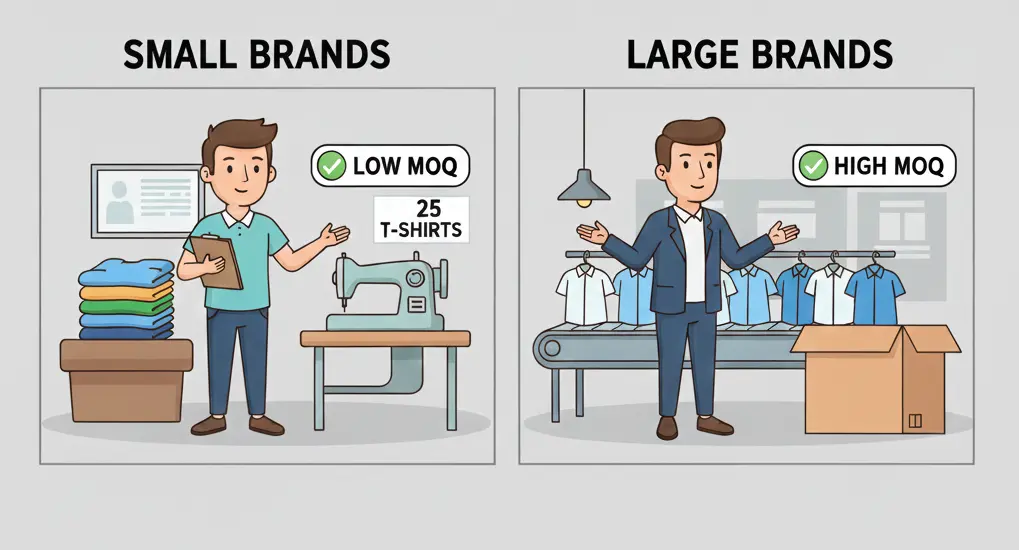
Startup-friendly clothing manufacturers often offer low MOQs to help brands test designs and validate demand. These are ideal for first launches and limited collections.
Growing Brand MOQs
As brands scale, MOQs usually increase. Higher volumes allow the clothing manufacturer to reduce per-unit costs and improve production efficiency.
Established Brand MOQs
Large brands typically work with clothing manufacturers that specialize in high-volume production. These manufacturers require higher MOQs but offer better pricing and consistency at scale.
How to Work With Clothing Manufacturer MOQs Strategically
MOQs do not have to limit growth if managed correctly.
Brands can reduce risk by limiting color variations, starting with fewer sizes, or launching smaller test runs. Some clothing manufacturers also allow phased production once trust is established.
Sharing long-term growth plans can help brands negotiate more flexible MOQ terms.
When Low MOQ Clothing Manufacturers Make Sense
Low MOQ clothing manufacturers are ideal for startups, niche brands, and product testing. They allow faster market entry with lower financial risk.
However, brands should still evaluate quality control, communication, and scalability. Low MOQ alone should not be the deciding factor.
Common MOQ Mistakes Brands Should Avoid
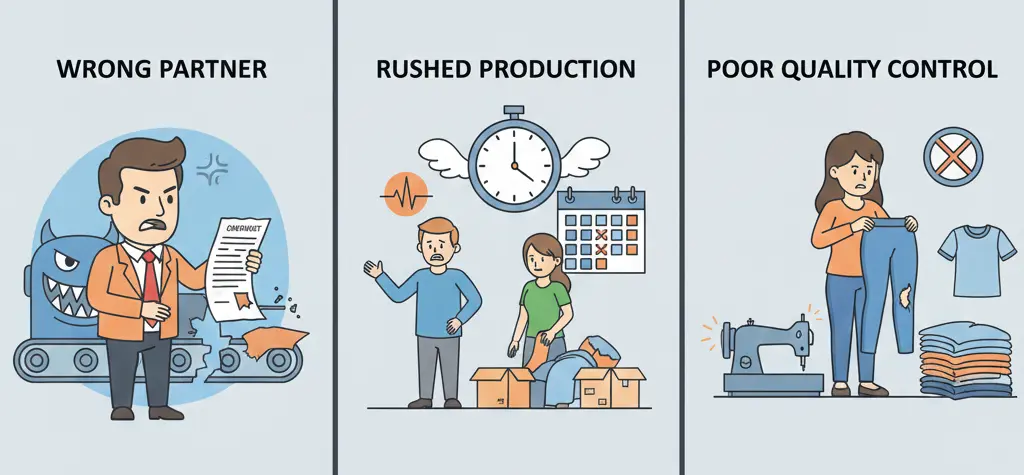
Many brands focus only on finding the lowest MOQ.
This often leads to higher costs per unit, inconsistent quality, or limited production capacity. The goal is not the lowest MOQ, but the right MOQ for your current and future needs.
Final Thoughts on Clothing Manufacturer MOQs
Minimum order quantities play a major role in manufacturing decisions. Brands that understand MOQs can plan better, protect cash flow, and build stronger relationships with their clothing manufacturer.
The best approach is balancing flexibility today with scalability tomorrow.