How to Design a Football Kit for Your Club
Colours, crest, sponsors, numbers and fabric: how to design a football kit that looks right, follows the rules and can actually be made, from a manufacturer that sublimates club kits.
Guides7 min read
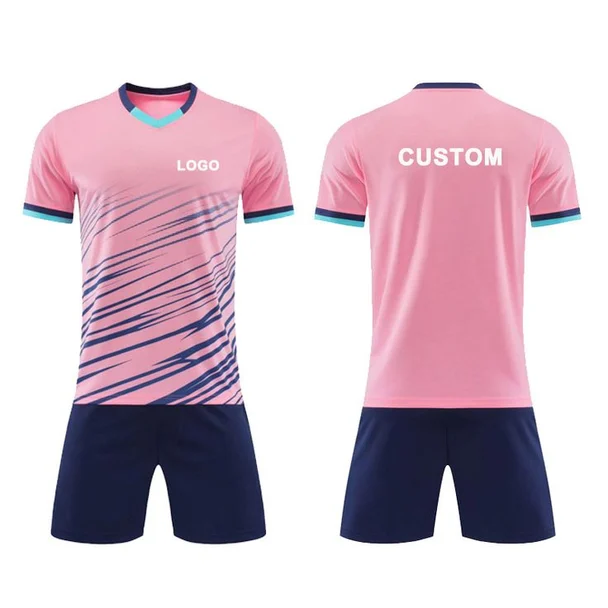
A new kit is the most visible thing a club orders, and it is easy to get wrong: colours that clash with half the league, a sponsor logo that is too big for the rules, numbers nobody can read from the touchline. This guide walks through how to design a football kit step by step, from the rules it has to meet to the fabric it is made in. It is written by Desa & Co, a clothing manufacturer in Tirana that makes sublimated match kits and club teamwear.
The short answer: good football kit design starts with the rules on colours. Then pick a home and away colour scheme with a clearly different goalkeeper kit, size the crest and sponsors to your football association's limits, choose readable numbers, then turn it into one design file the manufacturer can produce.
Key takeaways
Your kit must be distinguishable from the opponents and the match officials, and your goalkeeper's from everyone else.
Under The FA's 2026-27 regulations in England, the front-of-shirt sponsor area can be up to 250 cm² and the crest up to 100 cm².
Sublimation dyes any colour, pattern, crest and sponsor into the polyester, so nothing cracks or peels.
Plan sizes for every team at once, and order well before the season starts.
1. Start with the rules
Every kit has to meet Law 4 of the Laws of the Game, which The FA publishes for each season (The FA, Law 4: The Players' Equipment). The points that matter for design:
- Compulsory kit: a shirt with sleeves, shorts, socks, shinguards and footwear.
- Colours: the two teams must wear colours that distinguish them from each other and from the match officials, and each goalkeeper must be distinguishable from the other players and the officials.
- Undershirts: they must be one colour, the same as the main colour of the shirt sleeve, or exactly replicate the sleeve's pattern.
- Slogans: kit must not carry political, religious or personal slogans, statements or images.
Your league or competition may add its own rules on colours, numbers and sponsors, so check them before you finalise the design.
2. Choose colours that work on the pitch
Most clubs already have colours; the design work is in using them well. Think in sets rather than a single shirt:
- Home kit in the club's main colours.
- Away kit in a contrasting colour, for matches where the home kits clash. A mostly white or mostly dark away kit avoids a clash with many opponents.
- Goalkeeper kits in a colour no outfield kit in your league uses, ideally two of them so one always works.
Keep strong contrast between the shirt and its numbers, and remember that very similar shades (navy and black, or red and maroon) can look the same under floodlights or in rain.
3. Pick a pattern
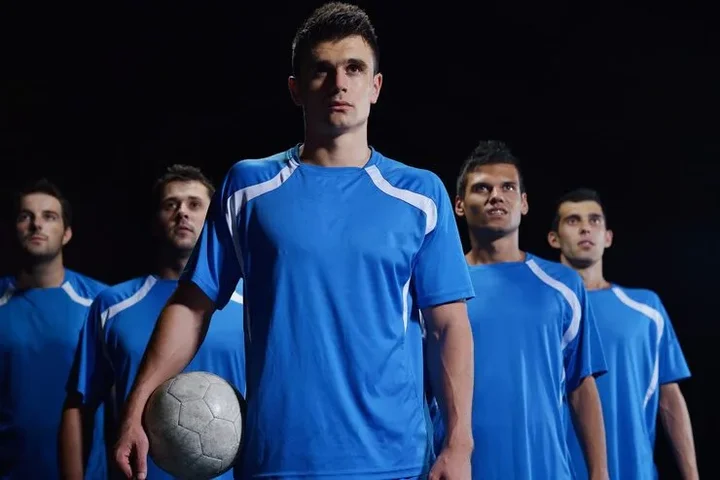
With sublimation, stripes, hoops, gradients, sashes and subtle tonal patterns are all printed the same way as a plain colour. The limit is readability, not the process. Keep busy patterns away from where the numbers and sponsor go, and check the design at a small size, because that is how many spectators and photos will see it.
4. Size the crest and sponsors to the rules
In England, The FA's Kit and Advertising Regulations set the maximum size of each item on the playing kit, and in them a "club" includes any team, whether or not it is part of a club (The FA, Kit and Advertising Regulations 2026-27):
Item | Where | Maximum area |
|---|---|---|
Club crest or name | Once on the front of the shirt | 100 cm² |
Club crest or name | Once on the shorts | 50 cm² |
Main sponsor | One area on the front of the shirt | 250 cm² |
Sponsor | One area on the back of the shirt | 100 cm² |
Sponsor | Each sleeve, between the shoulder seam and the elbow, if your County FA or competition rules permit it | 100 cm² |
Sponsor | One area on the back of the shorts | 100 cm² |
Two details catch clubs out. The area includes any box or outline around the logo and the space inside it, so a logo on a coloured panel is measured by the panel. And the same sponsor advertising must appear in the same form on every player and club official for the whole match. The regulations also remind clubs and manufacturers to get the necessary permissions before manufacture. Scotland, Wales and Northern Ireland have their own associations and rules, so check yours. This is a summary of the parts that affect design, not the full regulations: confirm your design with your County FA or league before you order.
For scale, 100 cm² is a 10 × 10 cm square and 250 cm² is, for example, 25 × 10 cm. Supply the crest and every sponsor logo as vector files (PDF, AI or SVG) so they print sharp at any size.
5. Add numbers and names
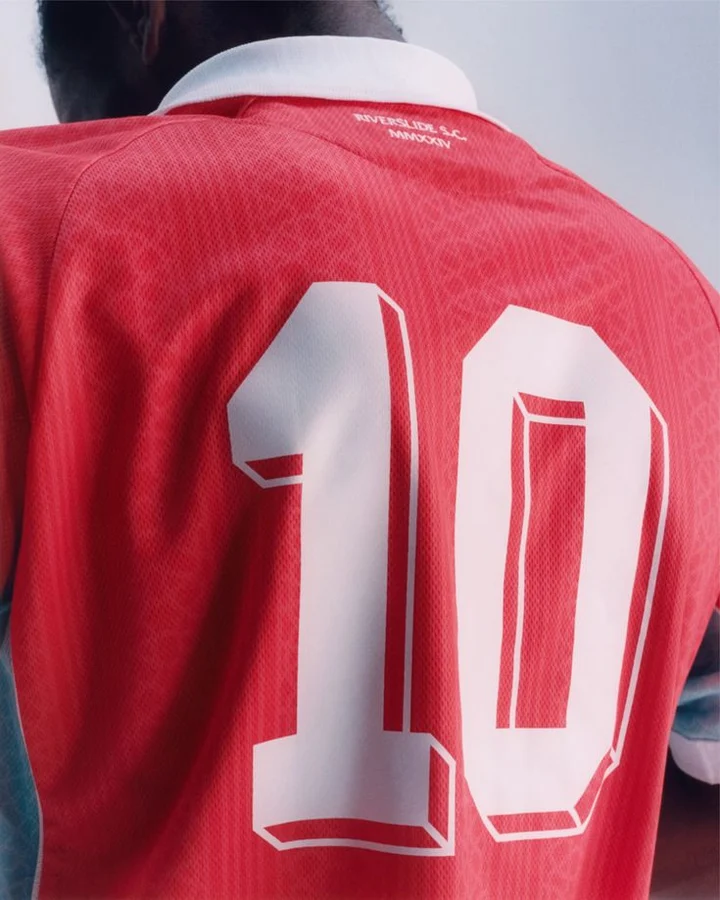
Numbers have one job: to be read from a distance. Choose a plain, bold font in a colour that contrasts strongly with the shirt, and avoid putting them over stripes or patterns. Decide early whether you want names, and whether numbers also go on the shorts or the front of the shirt, because your league's rules may require or limit them. Ask how numbers and names will be applied, and check every one on the design proof before you approve it.
6. Choose the fabric and how the design goes on
Our sublimated match kits are made in moisture-wicking polyester sports knit, which takes sublimation. In sublimation the colours, crest and sponsors are dyed into the polyester itself, so they do not crack, peel or fade. Our guide to polyester vs cotton explains why sportswear is polyester.
The rest of the club's teamwear usually uses other methods. On jackets, hoodies and polos we embroider the crest or print it with DTF. Our training tops are polyester or stretch nylon at 200 to 240 g/m², and our club hoodies are 280 to 320 g/m² fleece; our guide to fabric weight (GSM) explains what those numbers mean.
7. Plan sizes and quantities for the whole club
Collect sizes for every team before you order, from the youngest age group to the first team, and add a few spare shirts in the common sizes and numbers for new players. Ordering all teams at once keeps colours consistent across the club.
Our minimum is 100 to 150 pieces per product, so we are the right fit for clubs ordering for several teams, academies, leagues and schools, rather than a single squad. Production of the minimum quantity takes 2 weeks after sample approval, so start the design well before the season to leave time for approvals.
From design to finished kit with Desa & Co
- Send us your design, or a brief with colours and references, plus the crest and sponsor logos as vector files.
- We send the design for approval with the quote and timeline; on request we make a sample.
- After approval we produce the kits in our factory in Tirana and deliver to the United Kingdom, Italy or anywhere in Albania.
Alongside match kits we make training tops, shorts, base layers, performance polos for coaches, and club jackets and tracksuits with an embroidered crest. Production is certified to ISO 9001, ISO 14001 and ISO 45001. See everything on our custom football kits page, or send us your design and quantities for a quote.
Frequently asked questions
How big can a sponsor logo be on a football shirt?
Under The FA's 2026-27 Kit and Advertising Regulations, the front-of-shirt sponsor area can be at most 250 cm², and the back of the shirt, each sleeve (where County FA or competition rules permit) and the back of the shorts at most 100 cm² each. Other associations and competitions set their own limits.
Can a kit have more than one sponsor?
Yes. The FA's regulations allow one or more companies to be advertised in the permitted areas, as long as each area stays within its size limit and every player and club official wears the same advertising. Check your league's rules too.
Does the goalkeeper need a different colour?
Yes. Law 4 requires each goalkeeper to wear colours that are distinguishable from the other players and the match officials.
What is a sublimated football kit?
A sublimated football kit is one where the colours, pattern, crest and sponsors are dyed into the polyester fabric rather than printed on top of it, so they don't crack, peel or fade.
Need clothing made for your team?
Send us the product, the quantity and your logo, and we will reply with a quote and a delivery date.
Request a quoteKeep reading
GSM Meaning: Fabric Weight in Clothing Explained
What GSM means on a T-shirt, polo or hoodie, how it is measured and converted to ounces, what it does and doesn't tell you about quality, and which weight to choose for uniforms and merch.
Polyester vs Cotton for Work Uniforms
Cotton, polyester or a polycotton blend? How each fabric wears, washes and lasts in a work uniform, and which one suits offices, kitchens, clinics, sites and sports teams.
How to Start a Clothing Brand: Step by Step
From the first idea to stock you can sell: how to plan a clothing brand, brief a manufacturer, approve samples and order your first production run, written from the factory's side.