Private Label vs White Label Clothing
The difference between private label and white label clothing: who designs the garment, who else can sell it, minimums, lead times, what drives the cost, who owns the design, and how to choose.
Guides6 min read
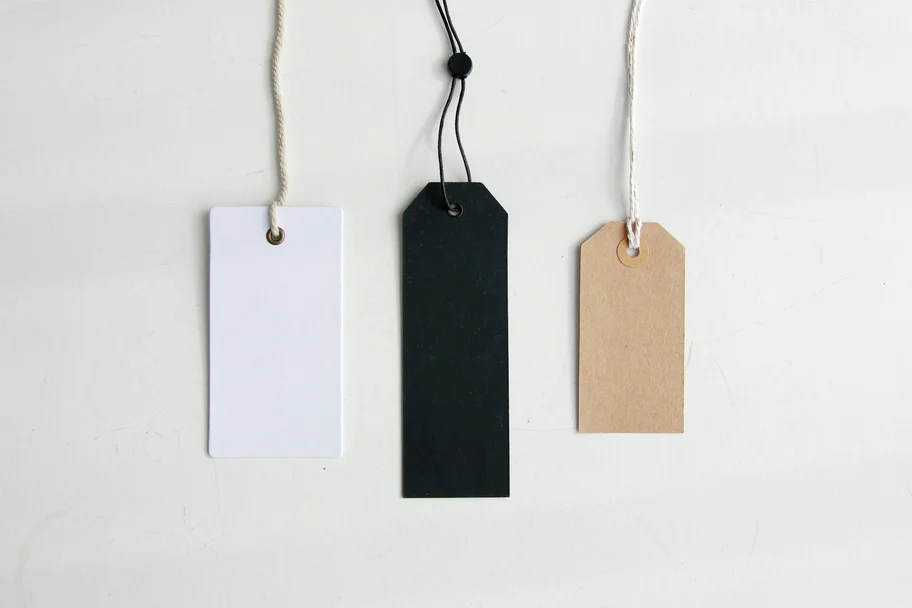
If you want to sell clothing under your own name, two terms come up straight away: private label and white label. Both end with your brand on the garment, but they are different businesses, with different control, exclusivity and risk. This guide explains both models in clothing, compares them side by side and shows how to choose. It is written by Desa & Co, a clothing manufacturer in Tirana that produces private label clothing to brands' own designs and labels.
The short answer: white label clothing is a ready-made, generic garment that several sellers can rebrand as their own; private label clothing is made to one brand's own design and specification, for that brand only. White label is quicker to start; private label gives you a product nobody else sells.
Key takeaways
White label: the supplier designs the garment and can sell the same one to many brands.
Private label: you set the design and specification, and the garments are made for you alone.
White label is usually faster to market; private label takes more preparation and investment up front.
In the UK, the designer, not the client who commissioned it, is a design's initial owner unless a contract says otherwise, so put ownership in writing.
What white label means in clothing
A white-label product is made by one company and relabelled by others so that it appears to be their own (Wikipedia, White-label product). In clothing, that usually means a supplier's standard garment, a plain T-shirt or hoodie from its range, sold to you with your brand added: a printed logo, your own neck label or swing tag, or both.
The key point is that the design is the supplier's. You choose from what it already makes, with little or no customisation, and the same garment can be sold by many other brands (Shopify). Your brand is the difference, not the product.
What private label means in clothing
A private label is a brand owned by the company that sells the product, while the manufacturing is outsourced to a third party. Unlike a white-label product, a private-label product is made by the manufacturer exclusively for one client, who sets the specifications (Wikipedia, Private label).
In clothing, setting the specifications means deciding the cut and fit, the fabric and its weight, the colours, the trims, the decoration and the labels. The usual way to hand that over is a tech pack; our guide on what a tech pack is shows what goes in one. The manufacturer then produces the run with your labels sewn in, and you sell it as your own collection.
Private label vs white label: side by side
White label | Private label | |
|---|---|---|
Who designs | The supplier: you pick from its range | You: your design and specification |
Exclusivity | None: other brands can sell the same garment | The garments are made for your brand only |
Minimum order | Set by the supplier's stock or batch sizes | The factory's production minimum, usually per style |
Lead time | Short: the garment already exists | Longer: design, fabric, approval, then production |
What drives the cost | The supplier's unit price plus your branding | Fabric, construction, trims and labels, and quantity |
Design ownership | The design stays with the supplier | Can be yours, if the contract says so |
Labels | Your label may replace or sit beside the supplier's | Your own labels from the start |
Two rows deserve a closer look. On speed and money, white-label products can usually reach the market faster, while private label needs more up-front investment in development (Shopify). On minimums, a private label order is a production run, so ask how the factory counts its minimum; our guide to what MOQ means explains the per-style, per-colour and per-size versions.
Who owns the design
With white label there is nothing to own beyond your brand: the garment is the supplier's. With private label the design is the reason you are paying for development, so ownership matters. In UK law, since the Intellectual Property Act 2014, in the absence of a contract to the contrary, the designer, not the person who commissioned the design, is its initial owner (legislation.gov.uk, explanatory notes). If a freelance designer or a factory develops your pattern, agree in writing that the design is yours.
Unregistered UK design right protects the shape and configuration of a product automatically, for whichever ends first of 10 years from the end of the year it was first made available for sale or 15 years from the end of the year it was created (GOV.UK, design right). It does not cover surface decoration (Copyright, Designs and Patents Act 1988, section 213), so a print on a plain garment is not protected by it. Your brand name is a separate matter; a trade mark protects that.
Where blanks and decoration fit
A lot of company merch, and some first collections, sit between the two models. A plain garment with your logo embroidered or printed on it, and perhaps your label added, behaves like white label: the garment is not exclusive, but the branding is yours. It is a sensible way to test a brand name or supply a team before committing to your own designs.
The step to private label comes when the garment itself has to be different: your own fit, a fabric weight competitors do not use, a particular colour, your own labels sewn in at the neck and seam. Whichever route you take, textile products sold in the UK must be labelled with their fibre composition (GOV.UK, textile labelling).
How to choose
- Choose white label if speed matters most, you are testing demand, or your brand is the artwork and message rather than the garment.
- Choose private label if the product is the brand: fit, fabric and finish are what customers buy, and you need a collection nobody else can stock.
- Check your quantities. Private label is a production run per style, so a small number of strong styles goes further than a wide range.
- Prepare before you ask for quotes. Designs, measurements, fabric, labels and quantities make quotes comparable; our guide on how to start a clothing brand covers the steps before production.
Private label with Desa & Co
We produce private label clothing: your designs, your labels, made in our factory in Tirana. We make T-shirts, polos, hoodies, joggers and jackets, among other garments, from 100 to 150 pieces per product depending on the garment, with sizes and colours mixed within that minimum. Fabric is sourced through our suppliers in Turkey. Production of the minimum quantity takes 2 weeks after design approval; for larger quantities, ask us. Embroidery and DTF printing are done in house, our cotton is certified to OEKO-TEX® Standard 100, and the company is certified to ISO 9001, ISO 14001 and ISO 45001. We deliver to the United Kingdom, Italy and across Albania.
Our private label clothing manufacturer guide walks through how an order runs. See bulk custom T-shirts and custom hoodies, or send us your designs and quantities.
Frequently asked questions
Is print-on-demand the same as white label?
It is close. Print-on-demand puts your design on a stock blank and makes each piece when it is ordered, so the garment is generic like white label, but there is no stock to buy up front.
Can I start with white label and move to private label later?
Yes. Use the first range to learn which products, colours and sizes sell, then develop your own versions of the best sellers as private label.
Do I need my own designs for private label?
Yes: private label means the manufacturer produces your design. If you do not have a designer, a reference garment with clear notes on what to change is a starting point, but expect more questions before production.
Need clothing made for your team?
Send us the product, the quantity and your logo, and we will reply with a quote and a delivery date.
Request a quoteKeep reading
What Is Sublimation Printing on Clothing?
How dye sublimation works, from transfer paper to heat press, why it needs white or light polyester, its strengths and limits, how it compares with DTF and embroidery, and why football kits are made this way.
Uniform Tax Rebate: Who Can Claim and How
A plain-English summary of the UK uniform tax rebate: who qualifies, what counts as a uniform for HMRC, the flat rate amounts by job, how to claim for the current tax year and the 4 previous ones, and what it means for employers ordering branded uniforms.
How to Wash Work Uniforms and Keep Logos Sharp
How to wash branded polos, T-shirts, hoodies, workwear, hi-vis, scrubs and chef whites so the logo and the colour last: care labels, temperatures, drying, ironing and who washes PPE.