
How to Wash Work Uniforms and Keep Logos Sharp
How to wash branded polos, T-shirts, hoodies, workwear, hi-vis, scrubs and chef whites so the logo and the colour last: care labels, temperatures, drying, ironing and who washes PPE.
Guides7 min read
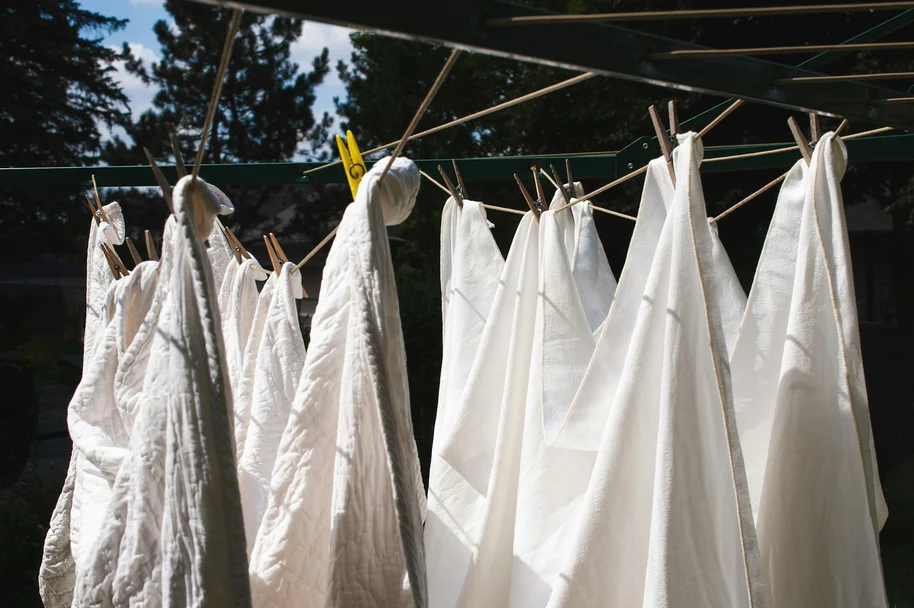
How should you wash branded work uniforms so the logo and the colour outlast the first few months? This guide is by Desa & Co, a clothing manufacturer in Tirana, Albania, that embroiders and DTF prints uniforms in its own workshop.
The short answer: follow the care label, turn garments inside out, wash similar colours together and keep high heat off printed logos in the dryer and under the iron. Healthcare uniforms and hi-vis have extra rules, covered below.
Key takeaways
The number in the wash tub symbol is the maximum temperature; bars underneath mean a gentler cycle.
Embroidery is the hardier logo for frequent washing; DTF prints need more care with heat: follow the label and wash inside out.
A hi-vis label can show the maximum number of cleaning cycles it was tested for: check the colour and tape as it nears that number.
In Great Britain, employers must keep the PPE they provide maintained, which includes cleaning it as appropriate.
Start with the care label
Most care labels in the UK and Europe use the symbols of the international standard ISO 3758, which GINETEX, the international association for textile care labelling, explains on its site (GINETEX). The five symbols cover washing, bleaching, drying, ironing and professional care. The ones that matter most for uniforms:
Symbol | What it means |
|---|---|
Wash tub with a number | The maximum washing temperature in °C, which must not be exceeded |
One bar under the tub | A milder cycle with reduced mechanical action |
Two bars under the tub | A very mild cycle, as used for wool |
Triangle | Bleach allowed; with two oblique lines, oxygen bleach only; crossed out, no bleach |
Square with a circle and dots | Tumble drying: one dot is a mild process (60°C), two dots normal (80°C) |
Iron with dots | One dot up to 120°C, two dots up to 160°C, three dots up to 210°C |
GINETEX adds that the ironing temperature should be chosen from the care label, not from the fibre content, and that caution is appropriate on fabrics with embossed effects or applications. A printed or embroidered logo can count as such an application, so the label is your first instruction and the tips below come second.
Temperatures by fabric
GINETEX's examples for each wash symbol give a rough guide: a 30°C fine wash for dark coloured cotton, polyester and mixed fabrics, a 40°C mild wash for synthetics, a 60°C coloured wash for coloured cotton, polyester and blends that must not be boiled, and 70°C or 95°C boil washes for white cotton or linen that is suitable for boiling. Your garment's label sets the limit within that.
Our polos are 65/35 poly-cotton and our T-shirts 100% cotton, and the same logic applies to most uniforms. Treat pure cotton as the less forgiving of the two: wash it no hotter than its label allows to avoid shrinking and fading. Our guide to polyester vs cotton for work uniforms explains the trade-off. For everyday uniforms with no hygiene requirement, washing at the lower end of what the label allows is kinder to colours and logos.
Caring for embroidered and printed logos
Embroidery is stitched into the fabric, so there is no ink layer to crack or peel. Its weak points are snagging and crushing: wash it inside out and iron the back of the embroidery on a towel rather than pressing the front flat.
DTF prints are a layer bonded to the fabric, so they need more care with heat and chemicals. Care instructions vary by transfer brand; FOREVER's sheet for its DTF Economy film, for example, says to wash up to 40°C, turn garments inside out, avoid fabric softener and liquid detergents, not tumble dry, and cover the print with baking paper or iron inside out (FOREVER). Whatever the brand, follow the care label sewn into your garment. See embroidery vs printing for how the two methods differ.
Separating, loading and drying
A few habits protect both the fabric and the logo:
- Sort by colour and soiling, and go easy on softener and bleach. Wash dark uniforms with dark clothes and whites with whites, and wash heavily soiled items on their own. FOREVER's care sheet advises against softener on its DTF prints, and bleach belongs only where the triangle on the label allows it. NHS England's 2020 uniform guidance recommends washing heavily soiled uniforms separately and not overloading the machine, because overloading reduces wash efficiency (NHS England).
- Close zips, buttons and hook-and-loop fastenings so they don't scratch prints or pull embroidery threads.
- Dry gently. Line drying is the safest option for printed logos and helps cotton keep its size. If you tumble dry, use the setting the label allows and take garments out while slightly damp.
- Iron around the logo. Iron printed garments inside out or through a cloth, and never put a hot iron directly on a print.
Hi-vis: count the washes
Hi-vis clothing is PPE, and washing affects how well it works. Garments certified to EN ISO 20471 can state a maximum number of cleaning cycles on the label. Jobman's user information explains that this number is not the only factor in a garment's lifetime, which also depends on use, care and storage, and that where no maximum is stated, the material was tested after 5 cleaning cycles. It also tells wearers to clean the garment when it is soiled to maintain full protection (Jobman). Keep a simple record of washes, and replace garments that reach the limit or whose fluorescent colour or reflective tape has faded. Our guide to hi-vis classes and EN ISO 20471 explains what the label tells you.
Scrubs, healthcare uniforms and chef whites
For healthcare, NHS England's 2020 uniform guidance asks staff to wash uniforms at the hottest temperature suitable for the fabric. It notes that a ten-minute wash at 60°C removes almost all micro-organisms, that washing with detergent at 30°C removes most Gram-positive micro-organisms including MRSA, and that there is little effective difference between domestic and commercial laundering. It also asks trusts to take this into account before buying uniforms that can only be washed at low temperatures or are dry clean only (NHS England). If you buy scrubs or tunics, check the care label allows a 60°C wash before you order; see our custom scrubs page.
Chef whites mostly face grease and food stains: wash them as hot as the label allows, and pre-treating stains before washing saves a lot of scrubbing later.
Who should wash PPE and contaminated workwear?
In Great Britain, the Personal Protective Equipment at Work Regulations 1992 require every employer to ensure that the PPE it provides is maintained, including replaced or cleaned as appropriate, in an efficient state and in good repair (legislation.gov.uk). HSE adds that employers are responsible for the maintenance, storage and replacement of the PPE they provide, and that workers cannot be charged for PPE they need for their work (HSE). Clothing contaminated with a hazardous substance may need to be laundered by the employer: for lead, HSE's construction guidance says to avoid washing contaminated clothing at home (HSE).
Ordinary branded uniforms, such as polos and T-shirts, are often washed by staff at home. If that is your policy, a short care sheet with the uniform, repeating the label in plain words, helps the garments last.
Uniforms made to be washed, from Desa & Co
We are a clothing manufacturer in Tirana, Albania. Our T-shirts are 100% cotton certified to OEKO-TEX® Standard 100, our polos are 65/35 poly-cotton piqué, and we embroider and DTF print in our own workshop, so we can match the decoration to how your uniforms will be washed. Our minimum is 100 to 150 pieces per product, production of the minimum quantity takes 2 weeks after design approval, and we deliver to the United Kingdom, Italy and across Albania. Tell us how often and how hot your uniforms are washed when you ask for a quote: see our custom workwear or contact us.
Frequently asked questions
How often should work uniforms be washed?
In healthcare, NHS England's 2020 guidance asks for a clean uniform at the start of every shift and enough uniforms for staff to change each day. Outside healthcare, follow your own policy: outer layers such as jackets and hoodies can go longer between washes.
Can you tumble dry uniforms with logos?
Only if the label shows the tumble dry symbol, and on the setting it allows. Embroidered garments usually cope well; printed ones last longer when they are line dried.
Why has my polo shirt faded unevenly?
Check the wash temperature, the detergent and how it is dried. Washing inside out at the lower end of the label's range and drying out of direct sun both help.
Need clothing made for your team?
Send us the product, the quantity and your logo, and we will reply with a quote and a delivery date.
Request a quoteKeep reading
What Is Sublimation Printing on Clothing?
How dye sublimation works, from transfer paper to heat press, why it needs white or light polyester, its strengths and limits, how it compares with DTF and embroidery, and why football kits are made this way.
Uniform Tax Rebate: Who Can Claim and How
A plain-English summary of the UK uniform tax rebate: who qualifies, what counts as a uniform for HMRC, the flat rate amounts by job, how to claim for the current tax year and the 4 previous ones, and what it means for employers ordering branded uniforms.
Logo Placement on Shirts and Uniforms: A Guide
Where should the logo go on a polo, T-shirt, hoodie, jacket or hi-vis vest? The common positions, typical sizes, embroidery or DTF for each, and how to brief your supplier.