
NHS Uniform Colours: The National Scheme
What the colours of NHS uniforms mean: the four core colour groups of the national NHS Healthcare Uniform, why trusts still differ, and what it means for clinics choosing their own scrub colours.
Guides5 min read
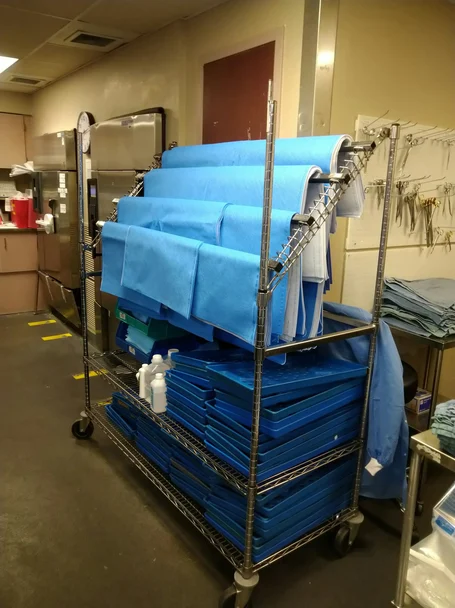
Walk through two different NHS hospitals and the same job can come in two different colours. That is changing, slowly: NHS England now has a national healthcare uniform with a common colour scheme, but every trust decides whether and when to adopt it. This guide explains what the national scheme is, which NHS scrub colours go with which professional group, why local colours still vary and what all this means if you run a clinic, care home or private practice choosing scrubs of your own. It is written by Desa & Co, a clothing manufacturer in Tirana that makes scrubs and tunics for healthcare teams.
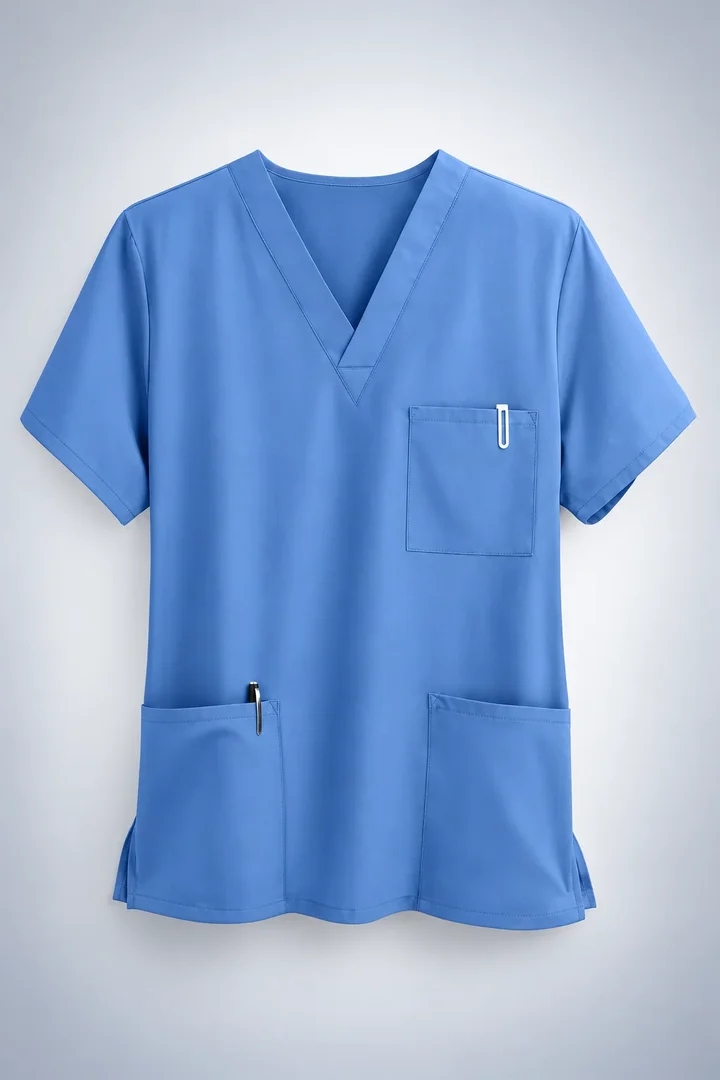
The short answer: the national NHS Healthcare Uniform has four core colour groups: blue for nursing and midwifery, green for pharmacy, teal for healthcare science, and ruby and white for allied health professionals (NHS Supply Chain colourways palette). Within each group, the trust decides which role wears which shade.
Key takeaways
NHS Supply Chain runs a national uniform for NHS trusts in England, but adopting it is each trust's decision.
Four core colour groups: nursing and midwifery blue, pharmacy green, healthcare science teal, allied health ruby and white.
Trusts map their own roles to the colourways, so the same role can still look different from one trust to another.
Clinics outside the NHS can choose their own colours; what matters is a clear, consistent key.
What is the NHS Healthcare Uniform?
The NHS Healthcare Uniform is a standardised uniform framework for NHS trusts in England, led by NHS Supply Chain. It covers roughly 600,000 wearers across nursing, midwifery, allied health professions, healthcare science and pharmacy, and includes a smart scrub top and dresses in all colourways (NHS Supply Chain). Paramedics have a separate national ambulance uniform.
It is not compulsory. NHS Supply Chain states that adoption is "a trust-led decision", and trusts adopt it at the end of their current uniform cycle (NHS Supply Chain). When the colours were unveiled in 2023, Nursing Times reported 15 colourways for clinical staff plus 12 trim colours for allied health professions (Nursing Times).
The four core colour groups
Professional group | Core colour |
|---|---|
Nursing and midwifery | Blue |
Pharmacy | Green |
Healthcare science | Teal |
Allied health professionals | Ruby and white |
These are the core groups in NHS Supply Chain's colourways palette (version 6, October 2024), developed with trusts, the Department of Health and Social Care, NHS England and professional bodies (NHS Supply Chain, colourways palette). Within the nursing colourways, roles range from student and healthcare assistant to nurse, matron and advanced practitioner (Nursing Times).
Why NHS uniform colours still differ between hospitals
Even trusts that adopt the national uniform decide locally which role sits in which colourway, with NHS Supply Chain helping them map their roles. Trusts that have not switched keep their own schemes, and many trusts publish visual guides for patients, such as North Cumbria Integrated Care's guide to what the different uniforms mean. So when someone asks what colour a nurse wears in the NHS, the honest answer is: it depends on the trust, and on whether it has moved to the national scheme yet.
The scheme has its critics. The Queen's Nursing Institute called it a "missed opportunity" (Nursing Times).
What the national uniform is made of
NHS Supply Chain describes the fabric as a 2-in-1 twill of recycled polyester and cotton sourced through the Better Cotton Initiative, with at least 10% mechanical stretch, and considerably lighter than a traditional tunic. In a wearer trial, 87% said the garments allowed a full range of movement and 73% said the fabric kept them at a comfortable temperature (NHS Supply Chain). Polyester-cotton blends suit healthcare uniforms for the same reasons they suit other workwear; our guide to polyester vs cotton explains the trade-offs.
Choosing scrub colours for a clinic or care home
Private clinics, dental and veterinary practices, care homes and aesthetics clinics are not bound by the NHS scheme. A few principles help whatever colours you pick:
- One colour per role, not per person. Patients learn the key quickly when every nurse, assistant and receptionist is consistent.
- Put the key on display. NHS trusts publish uniform guides for patients for a reason; a simple poster at reception does the same job.
- Avoid copying a local NHS trust exactly if your patients also use that hospital, so they do not confuse your team with NHS staff.
- Think about washing. Uniforms that are washed often need fabric and colours that hold up to it.
- Add your logo and name badges so the colour key is backed by clear identification; our guide to embroidery vs printing helps you pick the method.
Scrubs and tunics from Desa & Co
We make custom scrubs, tunics and trousers for clinics and care providers, in the colours you choose, with your logo embroidered in house. We do not supply the NHS Healthcare Uniform itself. Our minimum order is 100 to 150 pieces per product, with sizes and colours mixed within it, and production of the minimum quantity takes 2 weeks after sample approval. We deliver to the United Kingdom, Italy and across Albania. Tell us your roles and quantities and we will send you a quote.
Frequently asked questions
What colour do NHS nurses wear?
Under the national NHS Healthcare Uniform, nursing and midwifery sit in the blue colour group, with the trust mapping each nursing role to a shade within that group. Trusts that have not adopted the national uniform use their own colours.
Is the national NHS uniform compulsory?
No. NHS Supply Chain describes adoption as a trust-led decision, usually at the end of a trust's current uniform cycle.
What colour do allied health professionals wear?
In the national scheme, allied health professionals such as physiotherapists and occupational therapists are in the ruby and white colour group.
Can a private clinic use NHS colours?
Nothing forces a private clinic to follow the NHS scheme. If your patients also visit an NHS hospital nearby, choosing clearly different colours avoids confusion.
Need clothing made for your team?
Send us the product, the quantity and your logo, and we will reply with a quote and a delivery date.
Request a quoteKeep reading
What Is Sublimation Printing on Clothing?
How dye sublimation works, from transfer paper to heat press, why it needs white or light polyester, its strengths and limits, how it compares with DTF and embroidery, and why football kits are made this way.

Uniform Tax Rebate: Who Can Claim and How
A plain-English summary of the UK uniform tax rebate: who qualifies, what counts as a uniform for HMRC, the flat rate amounts by job, how to claim for the current tax year and the 4 previous ones, and what it means for employers ordering branded uniforms.
How to Wash Work Uniforms and Keep Logos Sharp
How to wash branded polos, T-shirts, hoodies, workwear, hi-vis, scrubs and chef whites so the logo and the colour last: care labels, temperatures, drying, ironing and who washes PPE.